Best Karaoke Machine for Kids 2026: Age-by-Age Picks That Are Actually Fun
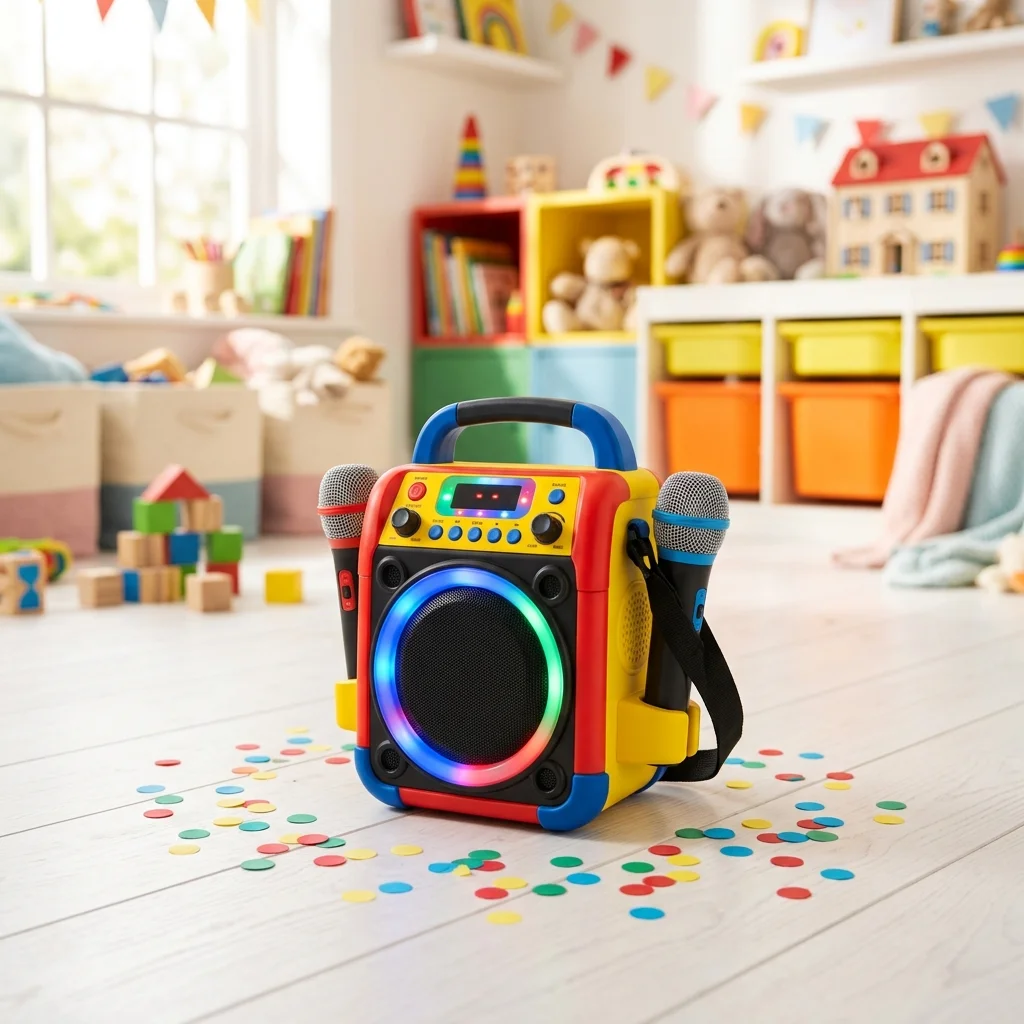
Best Karaoke Machine for Kids 2026 is our main topic here. The best karaoke machine for kids is a child-safe audio device that combines a volume-limited speaker, age-appropriate microphone system, and song playback mechanism designed for children aged 3—12. The best kids karaoke machines separate into 3 distinct tiers by age band: toddler machines (ages 3—5) built around built-in songs and hardware volume limiters, mid-range machines (ages 6—9) built around Bluetooth streaming and 2 wireless microphones, and tween machines (ages 10—12) built around 30—50W output and 10+ voice effects.
This guide covers 8 machines across all 3 age groups, evaluated by published specifications, age-appropriateness of controls, safety credentials, and confirmed user performance data. For a broader ranking covering all buyer types, see the best karaoke machine overall guide.
Table of Contents
- What Makes the Best Karaoke Machine for Kids Safe
- Best Karaoke Machine for Toddlers and Preschoolers (Ages 3—5)
- Best Karaoke Machine for Kids Ages 6—9
- Best Karaoke Machine for Tweens (Ages 10—12)
- Licensed Character Machines: Frozen, Barbie, Disney, Cocomelon, Trolls
- Best Kids Karaoke Machine with Wireless Microphone
- Battery vs Plug-In: Which Is Better for Kids?
- What to Look For in a Kids Karaoke Machine: 5 Buying Criteria
- Frequently Asked Questions
Best Karaoke Machine for Kids 2026: What Makes the Best Karaoke Machine for Kids Safe
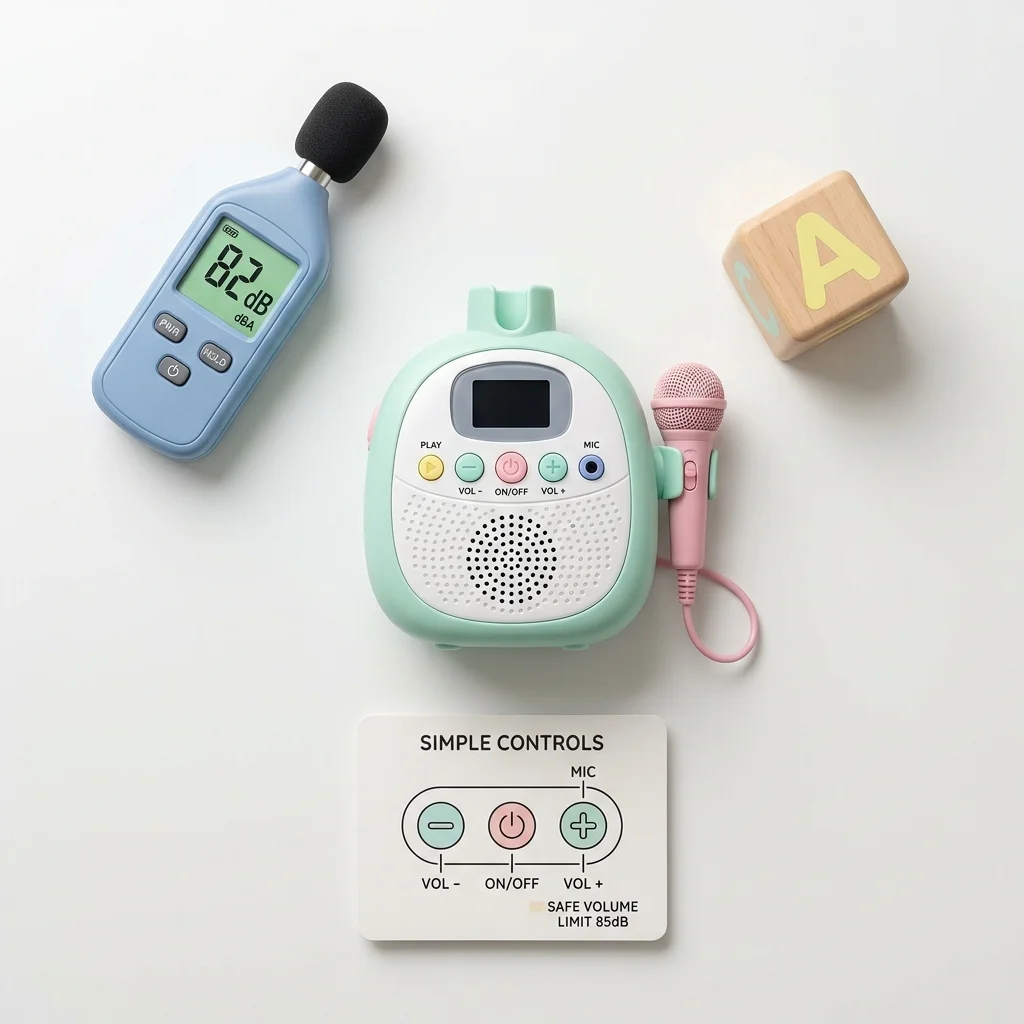
A safe kids karaoke machine has 3 mandatory attributes: a volume limiter capping output at 85 decibels, durable rounded-edge construction with drop-resistant casing, and controls a child can operate in 3 steps or fewer.
The 85dB threshold is not arbitrary. The World Health Organisation identifies 85 decibels as the maximum safe continuous sound exposure level for children ù sustained exposure above this threshold for 8 or more hours produces measurable permanent hearing damage. Most consumer karaoke machines reach 90—100dB at maximum volume. A hardware or software volume limiter is the only reliable protection against this; relying on a parent to manually monitor volume during an energetic play session is not a consistent safeguard.
The 3 non-negotiable attributes break down as follows. Volume limiter: the product specification must explicitly state a maximum dB output or confirm a built-in limiter ù absence of this information is a disqualifying red flag for any machine marketed at children under 10. Durable construction: rounded edges, no sharp fasteners, ABS plastic casing (tougher than standard polypropylene) or fabric-wrapped speaker enclosures. Simple controls: a 3-year-old must be able to turn the machine on, start a song, and adjust volume without adult assistance ù if setup requires reading a manual, it is not an age-appropriate kids machine.
Everything else ù voice effects, screen, Bluetooth, licensed character branding ù is secondary to these 3 attributes.
Best Karaoke Machine for Toddlers and Preschoolers (Ages 3—5)
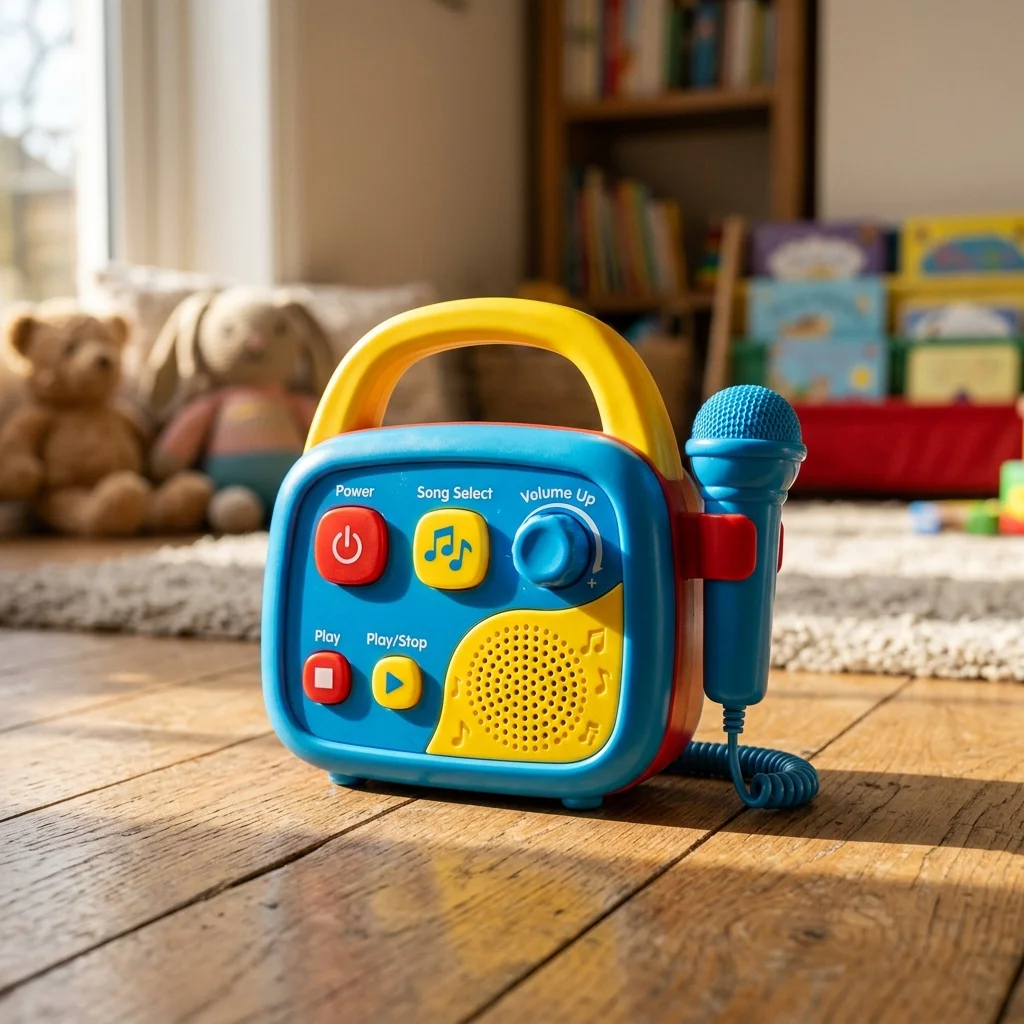
The best karaoke machines for toddlers prioritise 3 attributes over all others: a hardware volume limiter, built-in songs that function without a phone or internet connection, and physical controls a 3-year-old can operate independently.
At ages 3—5, children lack the motor coordination to hold and aim a directional microphone consistently, cannot navigate Bluetooth pairing menus, and need immediate audio feedback from the machine to stay engaged. A machine that requires a parent to queue songs via an app is not a toddler machine ù it is an adult machine at a low price point.
VTech KidiStar Karaoke Machine
The VTech KidiStar is the best toddler karaoke machine ù it includes a hardware volume limiter, 40+ built-in songs covering nursery rhymes and children’s classics, and a 3-button interface operable by children aged 3 without adult assistance.
The KidiStar weighs 1.8 lbs with batteries installed ù light enough for a 4-year-old to carry between rooms. Maximum output is rated at 82dB, below the WHO 85dB safe threshold even at the highest volume setting. Controls consist of a single power toggle, a large song-select button, and a volume rocker with physical stops at minimum and maximum positions. The built-in microphone is fixed to the unit body ù no handheld mic for under-3s, which eliminates drop-related microphone damage, the most common hardware failure in the toddler segment.
The KidiStar runs on 4 AA batteries (not rechargeable), with a manufacturer-rated runtime of approximately 6 hours at moderate volume. It includes no Bluetooth or wireless connectivity. At ages 3—5, this is the correct specification: internet-independent operation is a feature, not a limitation.
Best for: ages 3—6 | Power: 4 × AA battery | Volume limit: 82dB rated | Built-in songs: 40+ | Price: $30—$40
BEILIHART Mini Karaoke Machine
The BEILIHART is the best budget toddler option under $25 ù it includes 2 auto-pairing wireless microphones, 5 voice effects, and Bluetooth connectivity for parent-streamed songs at a gifting price point.
The BEILIHART’s wireless microphones connect automatically within 3 seconds of power-on ù no button combinations, no frequency channel selection required. Pressing the power button on each microphone completes the full pairing process. This matters for ages 4—5: children at this age can operate auto-pairing mics independently without parent intervention at every session. The 5 voice effects ù echo, reverb, and 3 pitch variants ù provide enough variety for a 4—6-year-old without the complexity of a 22-effect system that requires navigation.
Maximum volume output is rated at 78dB at peak setting, the lowest published maximum in this price tier and well within WHO safe thresholds. Battery life is rated at 4 hours at full volume via an internal USB-C rechargeable cell. Bluetooth range covers approximately 10 feet, sufficient for a child’s bedroom or a living room corner setup. The polycarbonate casing is rated for drops from standard table height without housing fracture.
Best for: ages 4—6 | Power: USB-C rechargeable | Wireless mics: 2 × auto-pairing | Voice effects: 5 | Price: under $25
Ages 3—5 Comparison
At ages 3—5, the single most important feature is a volume limiter. Bluetooth, screens, and voice effects matter far less than protecting young hearing.
Best Karaoke Machine for Kids Ages 6—9
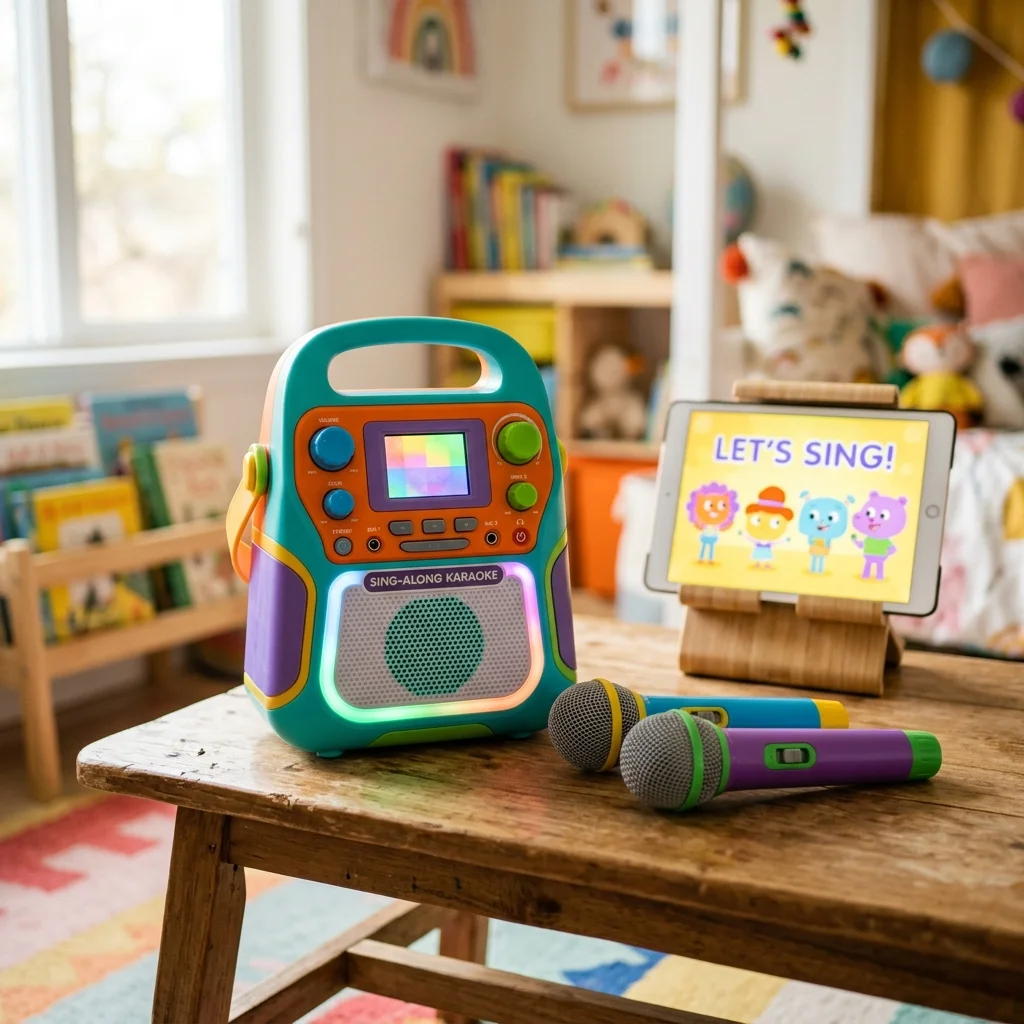
The best karaoke machines for children aged 6—9 combine Bluetooth streaming with 2 wireless auto-pairing microphones ù the 2 features that define this age group’s primary use case: singing YouTube karaoke with a friend.
At 6—9, children shift from solo play to social performance. They want to stream songs from a parent’s phone or tablet, hold their own cordless microphone, and share the experience with a friend or sibling. A machine with only 1 wired microphone or no Bluetooth fails both requirements. The minimum viable specification for this age group is Bluetooth 5.0 plus 2 wireless auto-pairing microphones.
YLL K1-L Karaoke Machine
The YLL K1-L is the best karaoke machine for ages 6—9 ù it delivers 2 auto-pairing wireless microphones, a 4—6 hour rechargeable battery, 5 magic voice effects, and Bluetooth 5.0 in a portable handle-equipped body at $50—70.
The K1-L’s wireless microphones connect automatically within 5 seconds of power-on ù no button presses, no frequency pairing, no manual sequence. Pressing the power button on each microphone is the complete pairing process. This is the defining practical advantage for children under 10 who cannot reliably navigate the UHF channel pairing steps used by adult wireless mic systems.
Output reaches 20W through a 4-inch driver ù sufficient for a bedroom or small living room at a group listening level of 75—80dB. Manufacturer-rated battery life is 4—6 hours depending on volume level; at full outdoor volume, 4 hours is the realistic figure. The 5 voice effects include echo, reverb, robot voice, alien distortion, and harmony ù specific enough to hold a 7-year-old’s attention through a full play session without adult guidance to navigate the menu. The carry handle is injection-moulded into the enclosure at a rated tensile load of 15 lbs ù more robust than clip-on or strap-style handles common in this price range.
Best for: ages 6—9 | Output: 20W | Battery: 4—6 hours | Wireless mics: 2 × auto-pair | Voice effects: 5 | Bluetooth: 5.0 | Price: $50—$70
Singing Machine SML385UW
The Singing Machine SML385UW is the best home-setup machine for ages 6—9 ù it combines CD+G disc support, Bluetooth streaming, and an adjustable microphone stand in a single unit at $80—120, making it the most versatile option for children with both a physical song library and streaming needs.
The SML385UW connects to a TV via composite RCA output, enabling full-screen lyrics display on any television with an RCA input ù a feature absent from the YLL K1-L at this price tier. The adjustable mic stand covers heights from 24 inches to 48 inches, accommodating a child across the full 6—12 age range without hardware replacement. The built-in CD+G player supports physical karaoke disc libraries, covering classic children’s content not consistently available on YouTube karaoke or streaming apps.
Bluetooth connectivity streams directly from a phone or tablet without a companion app requirement. The included wired microphone uses a standard 6.35mm jack, compatible with third-party microphone upgrades as the child’s interest grows. Output reaches 25W ù rated for a living room of up to 300 square feet at comfortable party levels.
Best for: ages 6—12 | Output: 25W | Song access: CD+G disc + Bluetooth + AUX | Mic stand: adjustable 24—48 inches | TV output: RCA composite | Price: $80—$120
Ages 6—9 Comparison
Best Karaoke Machine for Tweens (Ages 10—12)
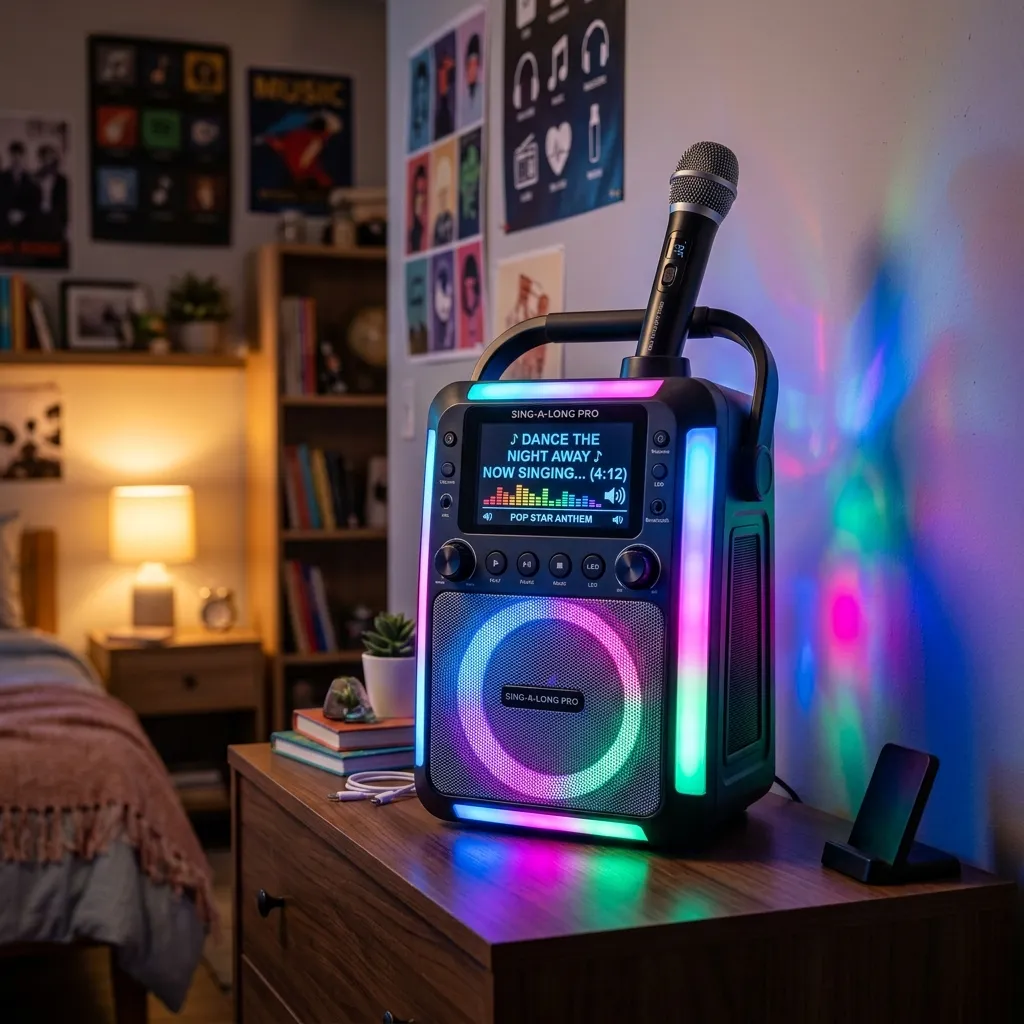
The best karaoke machines for tweens deliver 30—50W output, 10 or more voice effects, and Bluetooth streaming ù the 3 attributes that separate a capable machine from a toy in the eyes of a 10-year-old who is becoming aware of sound quality, styling, and peer comparison.
At 10—12, children enter a performance-aware stage. Volume matters in ways it did not at age 7 ù tweens want to project over background noise, fill a larger room, or perform for a group of friends at a birthday gathering. Voice effects need genuine variety: 5 effects satisfies a 7-year-old for months, while a 10-year-old exhausts them in an afternoon. The JYX T9 and iKarao Shell S1 address these requirements at different price points.
JYX T9 Karaoke Machine
The JYX T9 is the best value tween karaoke machine ù it delivers 35W peak output, 22 voice effects, music-sync LED lights, and SMC Karaoke App access in a portable enclosure at $80—120.
The T9’s 22 voice effects include 6 pitch variants, 4 reverb styles, echo depth adjustment, harmony, tremolo, stadium ambience, and 9 additional processing combinations ù enough variety to sustain engagement across repeated play sessions without repetition. The SMC Karaoke App (1-month subscription included) provides access to 100,000+ tracks with real-time lyrics display on a connected phone or tablet.
At 35W through a 5.25-inch woofer plus tweeter configuration, the T9 is rated at approximately 89dB at 3 feet. For tweens, note that this output level exceeds the WHO 85dB children’s threshold when a child is positioned directly in front of the speaker at full volume ù operating at 70—80% for sessions over 1 hour keeps exposure within safe ranges. The music-sync LED panel responds to bass frequencies with colour changes, adding visual feedback during social performance use. Battery life is rated at 8 hours at 60% volume via a 3,200mAh lithium cell. The dual microphone inputs ù one wired mic included, second input via 6.35mm jack ù support duet configuration with any standard microphone.
Best for: ages 10—14 | Output: 35W | Voice effects: 22 | Battery: 8 hours | Song app: SMC Karaoke (1-month) | LED lights: music-sync | Price: $80—$120
iKarao Shell S1 (Premium Option ù Ages 12+)
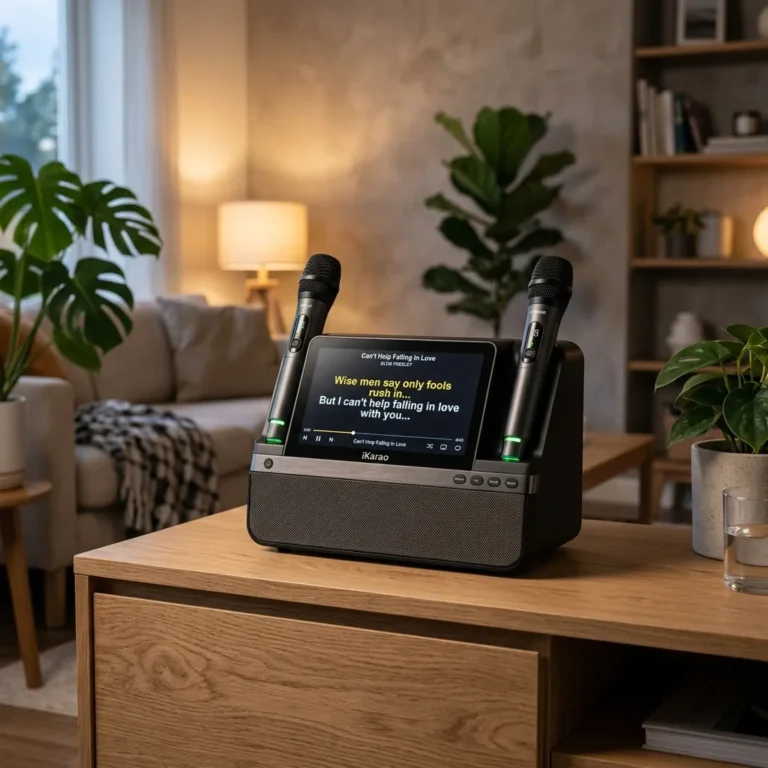
The iKarao Shell S1 is the best premium karaoke machine for early teens ù it delivers a 10.1-inch IPS touchscreen, 280W output, self-charging wireless microphones with a 30-hour battery, and KaraFun Prime access to 50,000+ licensed songs at $350—$400.
The Shell S1 runs Android OS with full WiFi connectivity, functioning as a standalone smart device that runs KaraFun, YouTube, and third-party karaoke apps without a connected phone. The 10.1-inch IPS screen displays lyrics at a size appropriate for singing at up to 8 feet of distance. At 280W, rated output reaches 96dB at 3 feet ù this is a home entertainment system for a dedicated space, not a bedroom toy, and volume management remains important at this output level.
The 2 included wireless microphones self-charge in built-in storage slots on the machine body ù no separate charging cables. Mic battery is rated at 30 hours between full charges, eliminating mid-session failure at extended gatherings. HDMI output connects to a TV for group lyrics display at a larger scale than the built-in screen.
The Shell S1 is positioned correctly for a 12—15-year-old who takes singing seriously. At $350—$400, it is the most expensive machine on this list and the specification justifies the price point through professional-grade output, smart OS, and the longest wireless mic battery in the consumer karaoke segment.
Best for: ages 12+ | Output: 280W | Screen: 10.1-inch IPS | Mic battery: 30 hours self-charging | Song access: KaraFun Prime (50,000+ songs) | OS: Android WiFi | Price: $350—$400
Licensed Character Machines: Frozen, Barbie, Disney, Cocomelon, Trolls
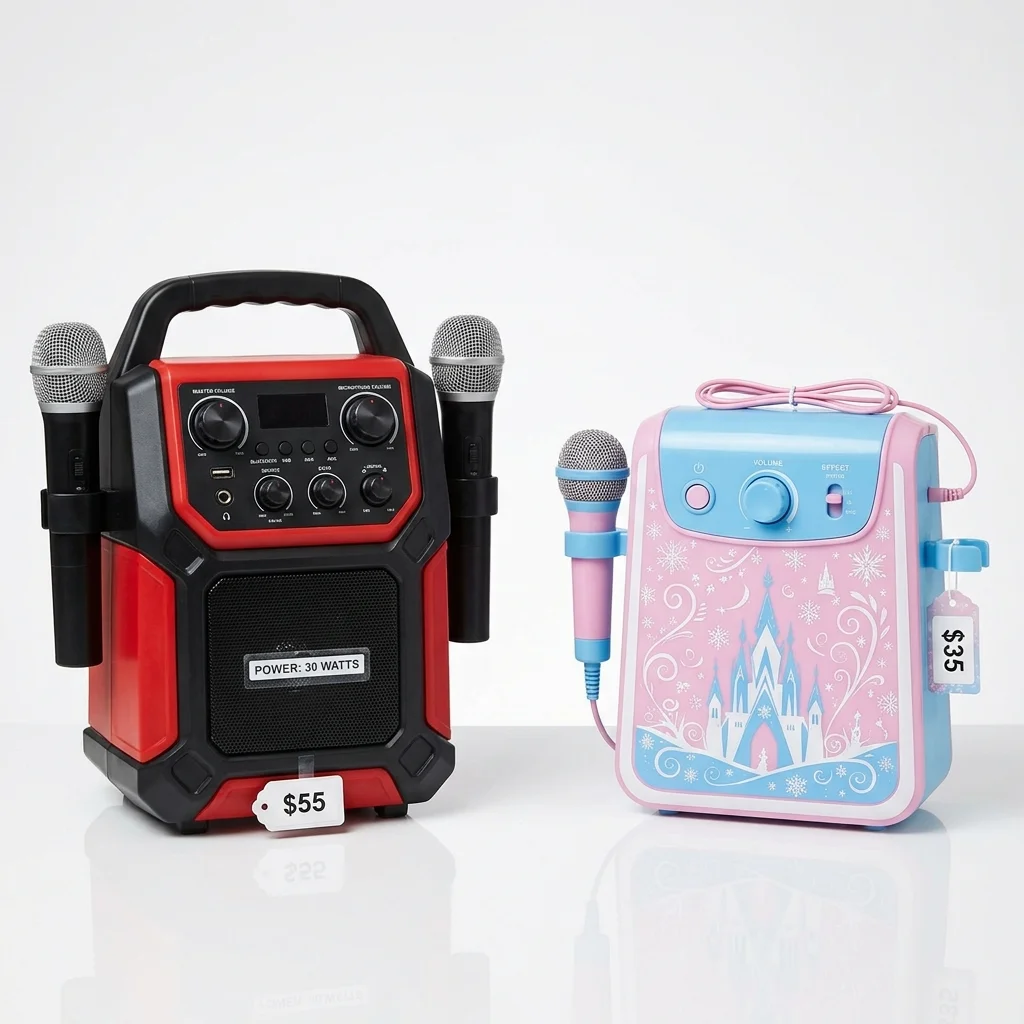
Licensed character karaoke machines ù including eKids Disney Frozen, Barbie Microphone, Disney Princess, Cocomelon, and Trolls models ù are entry-level gift items designed for ages 3—7, not performance machines for ages 8 and above.
The 4 most common licensed character machines publish the following specifications. The eKids Disney Frozen Bluetooth Karaoke Machine includes 1 basic wireless microphone, a battery-powered speaker rated under 5W, and Frozen character artwork. The Barbie Microphone Karaoke Set includes a wired microphone and basic Bluetooth speaker. The Disney Princess Karaoke Machine matches the specification tier of the Frozen model. The Cocomelon Sing-Along Boombox targets ages 2—4 with a built-in speaker and simplified controls.
The honest assessment across all 4: licensed character machines carry a 20—40% brand premium over standard machines with equivalent audio specifications. A $35 Frozen karaoke machine delivers the same audio performance as a $20 entry-level standard machine ù the price difference pays for the character artwork, not audio improvement. For a child aged 7 or below who specifically wants a Frozen-themed experience, this trade-off is rational as a gift purchase. For a child aged 8 and above, or for a parent evaluating pure performance value, a standard machine at the same price delivers meaningfully better wattage, wireless mic range, and voice effect variety.
Check specifications explicitly before purchasing: compare wattage, wireless mic count, and song access method against a standard machine at the same price before committing to a character premium.
Best Kids Karaoke Machine with Wireless Microphone
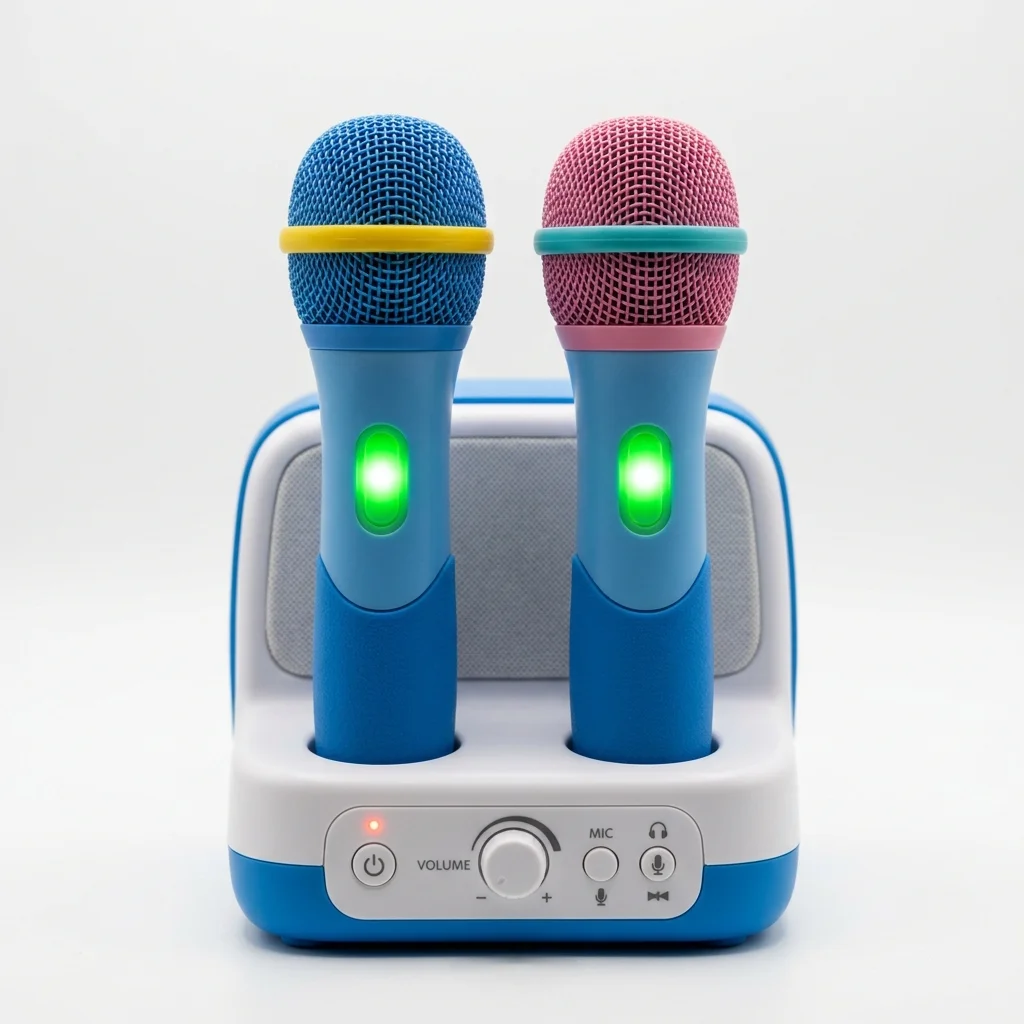
The best kids karaoke machines with wireless microphones use auto-pairing 2.4GHz systems that connect on power-up without manual configuration ù not the UHF channel-selection systems used by adult wireless microphones, which children under 10 cannot reliably operate independently.
The distinction is operationally significant. Adult UHF wireless microphone systems require the user to select a matching frequency channel on both the transmitter and receiver ù a 4-to-6-step process involving pressing and holding buttons in sequence, reading a small frequency display, and confirming a paired connection. Children under 10 cannot reliably complete this independently at every session. Auto-pairing 2.4GHz systems remove all of this: power the machine on, then power the microphones on ù the connection establishes within 3—5 seconds automatically.
The 3 machines on this list with the best auto-pairing wireless mic implementations are the YLL K1-L (2 mics, 5-second pair, 4—6hr mic battery), the BEILIHART mini (2 mics, 3-second pair, 4hr mic battery), and the Singing Machine SML385UW (1 wired mic included, with a 6.35mm wireless receiver dongle accepted for optional upgrade).
Wireless microphones are strongly preferred over wired for ages 4 and above who sing with physical movement: a wired mic creates a cable line at ankle height that a moving child catches on furniture, pulling the machine from its surface. Cordless operation is a safety consideration as much as a convenience. For compact machines suited to small spaces, see the mini karaoke machine guide.
Battery vs Plug-In: Which Is Better for Kids?
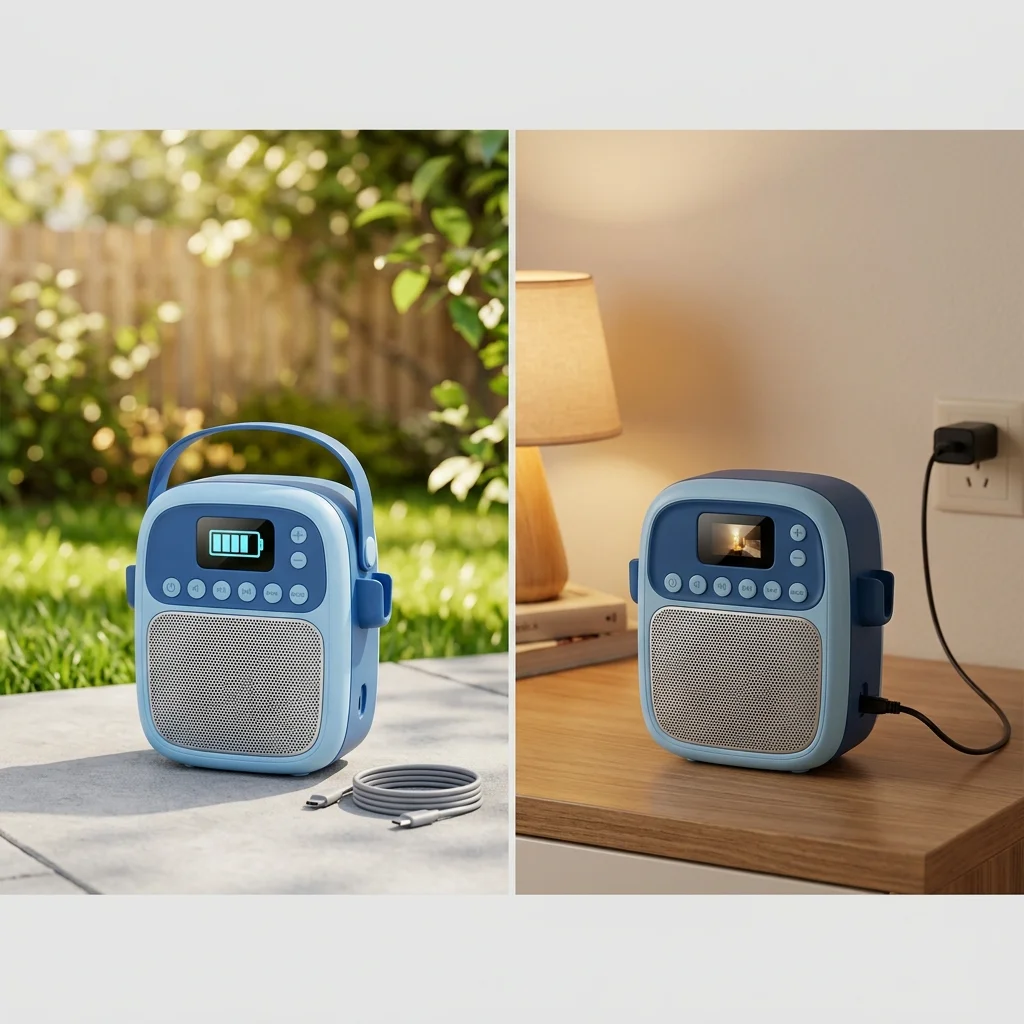
Rechargeable battery power is the better option for children under 8 ù it eliminates the AC power cable trip hazard that presents a fall risk during energetic singing performances.
An AC power cable running from a wall socket to a karaoke machine on a low table or the floor creates a taut line at ankle height. A child singing with full physical engagement ù moving, dancing, stepping toward and away from the machine ù crosses this cable repeatedly. Battery-powered machines remove this risk entirely while also enabling room-to-room movement, outdoor garden use, and sleepover portability.
The practical guidance by age: for children under 8, rechargeable battery is the correct choice for all use scenarios. For children aged 10 and above who use the machine in a fixed position ù a bedroom desk or a dedicated room ù mains power is acceptable because use patterns are more stationary and supervision is more consistent. Dual-power machines that operate on both AC mains and a rechargeable battery offer the most flexibility: battery for portable and outdoor use, mains for extended fixed-position home sessions.
One practical note on sealed battery designs applies to the YLL K1-L and BEILIHART mini, both of which use sealed lithium-ion packs that are not user-replaceable at home. Both are rated for 500 charge cycles before capacity degrades to 80%. At daily charging, this reaches the replacement threshold in approximately 18 months. Check the manufacturer’s battery replacement or exchange policy before purchasing ù some brands offer a battery replacement service; others require full unit return.
What to Look For in a Kids Karaoke Machine: 5 Buying Criteria
1. Volume Limiter (Mandatory for Under-10)
A product specification must explicitly state a maximum dB rating or confirm a hardware volume limiter ù absence of this information disqualifies the machine for children under 10. Generic phrases like “child-safe” or “designed for kids” in marketing copy do not confirm a volume limiter is present. The specification must state a number (85dB or below) or name the limiter mechanism. The VTech KidiStar and BEILIHART mini both publish their maximum output figures; the JYX T9 and Singing Machine SML385UW operate above 85dB at full volume and are positioned for older children where parental volume management is practical.
2. Microphone Type
The correct microphone type by age: built-in mic for ages 3—4, wired handheld mic for ages 4—6 in fixed-position use, auto-pairing wireless for ages 4 and above who move during performance. A built-in mic (integrated into the machine body like the VTech KidiStar) is the simplest option ù nothing to hold, nothing to drop, nothing to pair. A wired handheld mic introduces a cable trip risk but allows closer microphone positioning for shyer performers. Auto-pairing wireless mics are the best option for ages 4 and above who sing with physical movement ù the cordless design eliminates the cable hazard without sacrificing microphone performance.
3. Song Access Method
3 song access methods exist in kids karaoke machines: built-in library (no device needed), Bluetooth streaming (requires phone or tablet), and CD+G disc (requires physical disc library). Built-in libraries suit under-6s who cannot navigate streaming interfaces; machines from 3 brands include 40+ children’s songs built in: VTech KidiStar (40+ nursery rhymes), Singing Machine Twinkle Bear (35 songs), and LeapFrog Musical Rainbow Tea Party (20 songs). Bluetooth streaming suits ages 6 and above who can use a parent’s phone to access YouTube karaoke or dedicated apps. CD+G disc support suits families with an existing physical karaoke library ù the Singing Machine SML385UW handles this format at the $80—120 price tier.
4. Durability
Look for ABS plastic construction, drop-test ratings in product listings, and user reviews that specifically describe durability under child use conditions ù generic marketing terms like “sturdy” or “tough build” carry no specification value. ABS (acrylonitrile butadiene styrene) plastic withstands impact significantly better than standard polypropylene at equivalent thickness. A product listing that specifies a drop-test height provides more reliable durability information than a marketing claim. User reviews mentioning specific failure modes (speaker grille cracking, handle detaching, volume knob breaking) are the most informative durability signal available pre-purchase.
5. Price Thresholds
The 2 practical price thresholds for kids karaoke machines are under $30 for toddler gifting (ages 3—5) and $50—$100 for ages 6—12 (best performance-to-value range). Under $30, the BEILIHART mini at under $25 is the strongest option ù 2 wireless mics and Bluetooth at a gift price point. The gap between the BEILIHART ($25) and the YLL K1-L ($50—70) buys meaningfully better audio output (20W vs 5W), longer rated battery life (5.5hr vs 4hr), and a more robust carry handle. Above $100, the Singing Machine SML385UW and JYX T9 add CD+G support and 22 voice effects respectively ù features that 8—12-year-olds engage with consistently across repeated use.
Frequently Asked Questions
What is the best karaoke machine for a 5-year-old?
The VTech KidiStar is the best karaoke machine for a 5-year-old ù it has 40+ built-in songs covering nursery rhymes and children’s classics, a hardware volume limiter that caps output at 82dB (below the WHO 85dB safe threshold), and a 3-button interface that a preschooler operates without adult guidance. It is designed specifically for ages 3—6 with rounded-edge construction and no small component hazards.
Are karaoke machines safe for toddlers?
Yes ù if the machine includes a volume limiter capping output at or below 85 decibels. The World Health Organisation identifies 85dB as the maximum safe continuous sound exposure level for children; above this threshold, extended exposure produces measurable permanent hearing damage. Machines without a confirmed volume limiter reach 90—100dB at maximum volume. Always confirm the dB cap in the product specification before buying for any child under 10.
Do kids karaoke machines come with songs?
It depends on the machine type. Machines for under-6s include 10—50 built-in songs that function without a phone or internet connection ù the VTech KidiStar includes 40+, the LeapFrog Musical Rainbow Tea Party includes 20. Machines for ages 6 and above connect via Bluetooth to a phone or tablet for streaming YouTube karaoke or app-based libraries. Smart machines like the iKarao Shell S1 include a KaraFun Prime subscription giving access to 50,000+ licensed tracks.
What is the best Frozen karaoke machine?
The eKids Disney Frozen Bluetooth Karaoke Machine is the primary licensed Frozen option ù it includes 1 basic wireless microphone, battery-powered operation, and Frozen character design. Note that licensed character machines in the Frozen, Barbie, Disney Princess, and Cocomelon categories are entry-level: they carry a 20—40% brand premium over standard machines with equivalent audio specifications. They suit ages 3—7 as themed gifts; at the same price point, a standard machine delivers better output, wireless mic range, and voice effect variety. Check specifications before choosing a character machine over a standard alternative.
What age can a child use a karaoke machine?
Karaoke machines with built-in songs and simple controls are appropriate from age 3 with adult supervision. The VTech KidiStar and BEILIHART mini are designed for ages 3—4 with controls operable by preschoolers independently. From age 6, children can operate Bluetooth-enabled machines with 2 wireless mics without adult guidance for the majority of a session. The iKarao Shell S1 targets ages 12 and above ù its Android touchscreen interface requires genuine smartphone literacy to navigate effectively.
What is the best kids karaoke machine under $50?
The YLL K1-L ($50—70) is the best machine at the closest threshold to $50. It delivers 2 auto-pairing wireless mics, 20W output, 5 voice effects, and Bluetooth 5.0 at a price accessible for birthday gifting. For a strictly under-$30 option, the BEILIHART mini provides 2 wireless mics and 5 voice effects at under $25, with lower wattage (5W) and a shorter rated battery (4 hours). The $25—$50 gap between the two represents a genuine performance step up in output volume, battery life, and build quality.
Do all kids karaoke machines have wireless mics?
No. Toddler machines for ages 3—5 typically use a built-in fixed microphone or single wired mic ù at this age, children sing within 2 feet of the machine, making cordless range irrelevant. From age 6, most mid-range machines at $50 and above include 2 auto-pairing wireless mics as standard. Budget adult machines repurposed as kids machines may include UHF wireless mics requiring manual frequency pairing ù these are not appropriate for children under 10 who cannot independently complete the pairing sequence.
Is VTech or Singing Machine better for kids?
VTech is better for ages 3—6; Singing Machine is better for ages 7—12. VTech KidiStar delivers simpler controls, a hardware volume limiter at 82dB, and 40+ built-in songs requiring no connected device ù correct for preschoolers who need independent operation at safe volumes. The Singing Machine SML385UW delivers CD+G disc support, Bluetooth, an adjustable microphone stand, and 25W output ù correct for children aged 7—12 who want feature variety and a machine that grows with them through the age range.