Best Professional Karaoke Machine 2026: Top Picks for Bars, Venues and Events
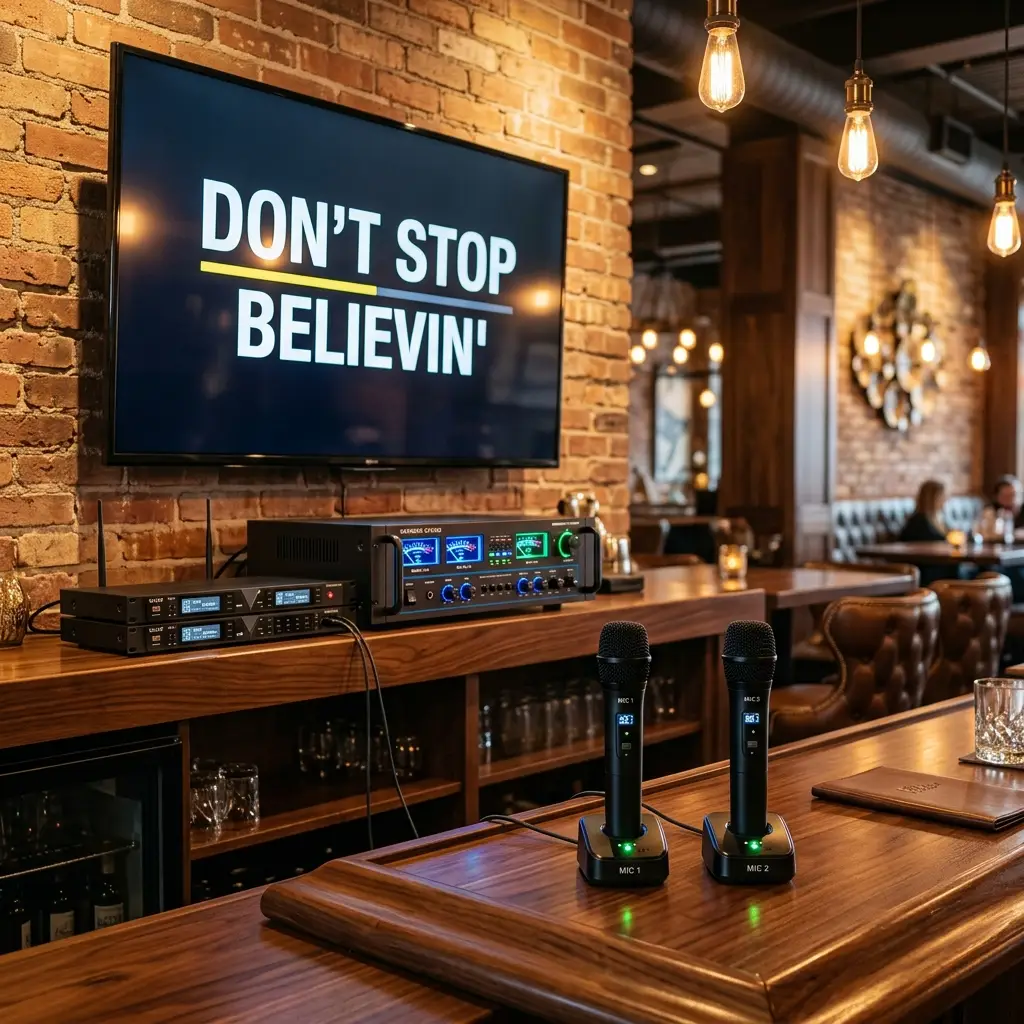
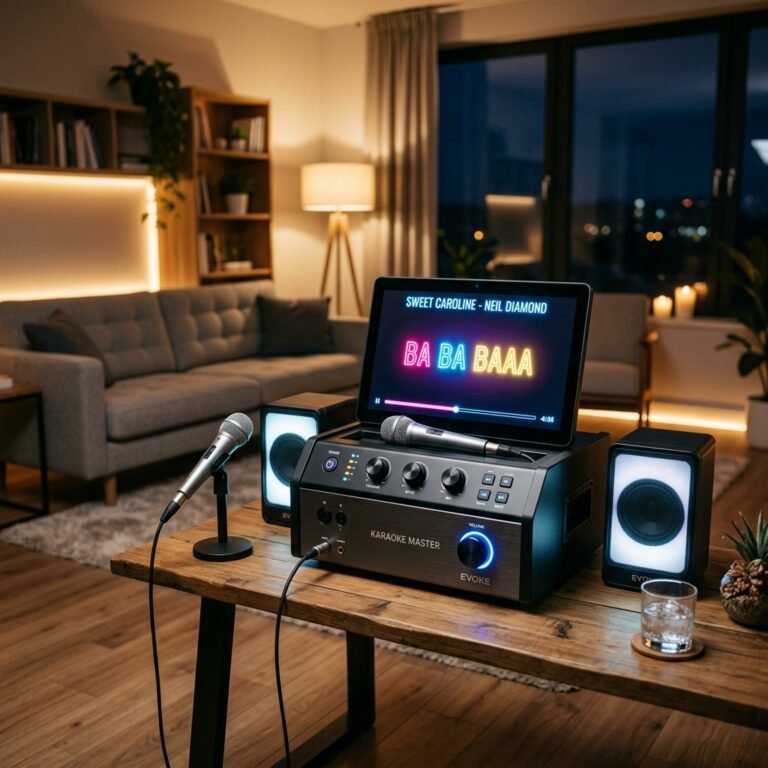
Best Professional Karaoke Machine 2026 is our main topic here. The best professional karaoke machine is a commercial-grade audio system delivering 300W+ output, XLR microphone inputs, and a managed song library system — designed for continuous use in bars, venues, restaurants, and event hire environments. The 3 attributes that separate professional from consumer machines are output power (300W+ vs 10–80W consumer), microphone input type (XLR balanced vs 6.35mm unbalanced), and song management (licensed RSN/KaraFun Business subscription vs built-in personal library). For a broader overview of all machine categories, see the complete best karaoke machine overall guide, or browse all karaoke machine reviews.
Table of Contents
- Choosing the Best Professional Karaoke Machine
- Professional Karaoke System vs Standalone Machine
- Best Professional Karaoke Machine by Venue Type
- Song Library Management for Commercial Karaoke
- Microphone System for Professional Karaoke
- Lyrics Display: Dedicated Screen vs HDMI TV vs Dual-Screen
- What to Look For in a Professional Karaoke Machine: 5 Criteria
- Frequently Asked Questions
Best Professional Karaoke Machine 2026: Choosing the Best Professional Karaoke Machine
Professional karaoke machines differ from consumer machines in 4 measurable attributes: output power (300W+ vs 10–80W consumer), microphone input type (XLR balanced vs 6.35mm unbalanced), duty cycle (rated for 8hr continuous operation vs 2–4hr casual use), and song library management (licensed multi-user commercial systems vs personal library). Running a consumer machine at commercial venue volumes for 4+ hours nightly produces thermal failure within 3–6 months. For a comparison with consumer-level home machines, see our best home karaoke machine guide.
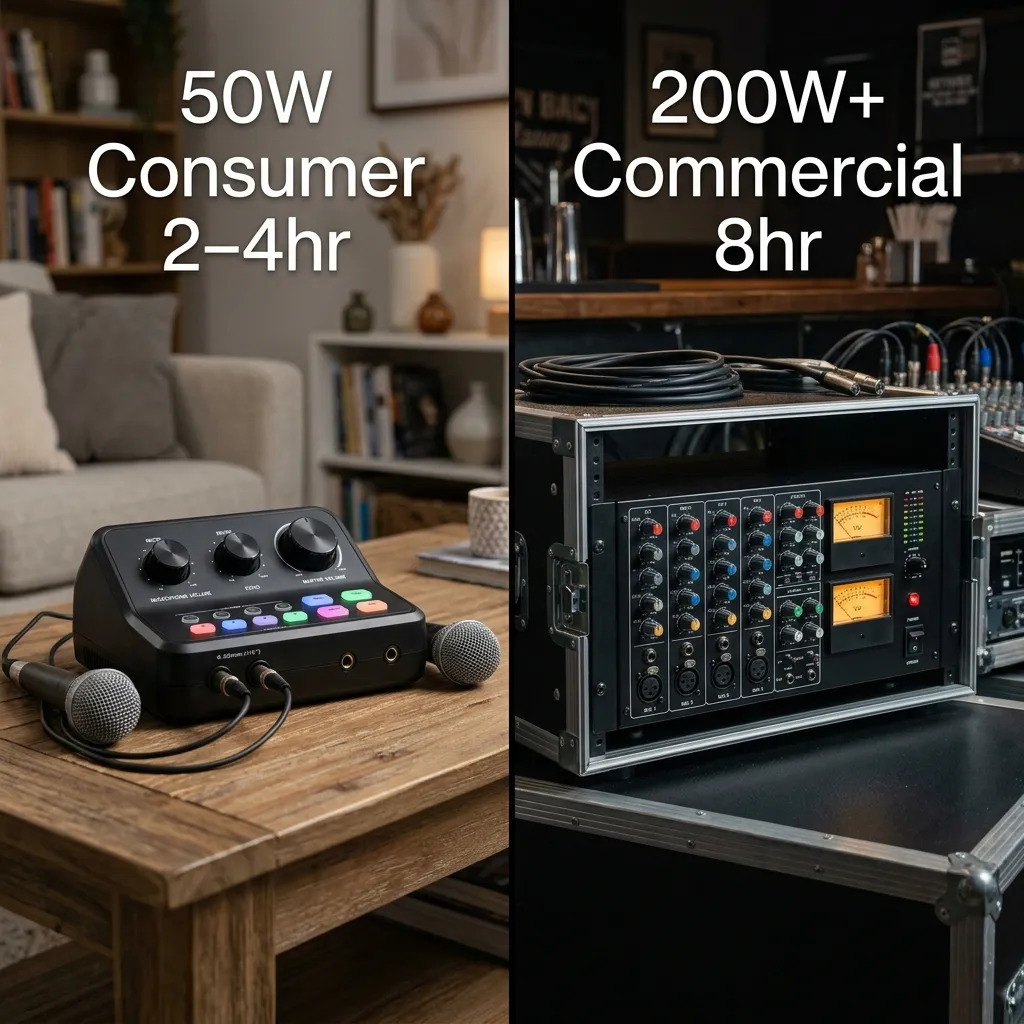 home karaoke machine versus professional 200W commercial karaoke amplifier rack unit” class=”wp-image-214″/>
| Attribute | Consumer Machine | Professional Machine |
|---|---|---|
| Output Power | 10–80W | 300W+ (venue-matched) |
| Microphone Input | 6.35mm unbalanced | XLR balanced (rejects interference) |
| Duty Cycle | 2–4 hours per session | 8 hours continuous operation |
| Song Library | Built-in / personal BT stream | Licensed RSN / KaraFun Business |
| Build Standard | Plastic consumer housing | Steel rack / commercial-grade chassis |
| Simultaneous Mics | 1–2 inputs | 4–8 XLR/UHF inputs |
Professional Karaoke System vs Standalone Machine
A professional karaoke system combines a dedicated karaoke amplifier or mixer, PA speaker system, and song management software — each purchased and configured separately. A standalone professional machine integrates all 3 in a single unit. The system approach delivers higher maximum output and greater configuration flexibility for permanent installations. The standalone approach is faster to deploy, more portable, and better suited for event hire and mobile DJ use.
Dedicated Karaoke Amplifier System
VocoPro DA-4000 Pro — Best for Permanent Bar & Venue Installation
The VocoPro karaoke machine DA-4000 Pro delivers 200W pre-amp output with 4 × XLR/6.35mm combo inputs, digital key control (±6 semitones), echo, reverb, and vocal enhancer processing. It requires separate PA speakers to complete the system — paired with 2 × 15-inch active PA speakers (e.g., Yamaha DBR15), the total system output reaches 300–600W. Best for fixed bar and venue installations requiring long-term continuous operation.
Best for: Permanent bar / restaurant installation. Requires separate PA speaker purchase.
All-in-One Professional Machine
iKarao Shell S1 — Best Self-Contained Professional Machine
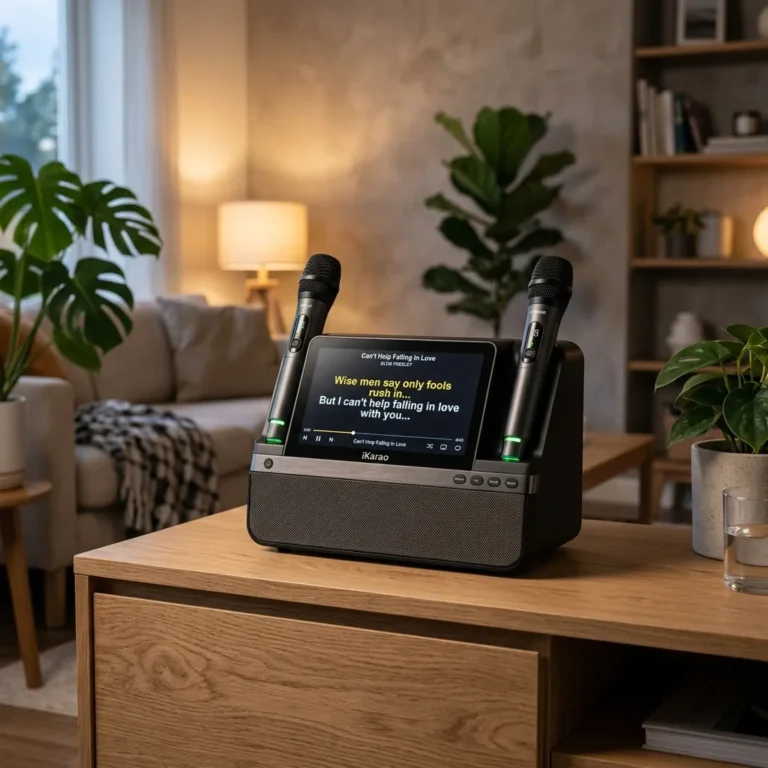
The iKarao Shell S1 delivers 280W from a single self-contained unit with a 10.1-inch IPS screen running Android OS, KaraFun Business ready (50,000+ licensed tracks at $29/month), self-charging wireless microphones (30hr battery), and HDMI output to venue TV. No separate PA required for venues up to 400 sq ft / 100 guests. Best for mobile event hire, residencies, and smaller venues that need a rapid-deploy self-contained system.
Best for: Event hire / mobile DJ / small venue. No separate PA required up to 100 guests.
Best Professional Karaoke Machine by Venue Type
The correct professional karaoke machine depends on 3 venue variables: room capacity (number of simultaneous guests), use frequency (nightly vs weekly), and installation type (permanent vs mobile). Each variable determines the minimum output power, microphone configuration, and song library platform required for reliable commercial operation.
Small Bar or Restaurant (up to 50 guests) — 100–200W
For a small bar with a 50-person capacity, 100–200W at 60% volume produces 92–94dB in a reflective brick or tile interior — sufficient for a solo host with background music and 1–2 microphones active. At full commercial performance levels (95dB average), 200W is the practical floor for this venue size.
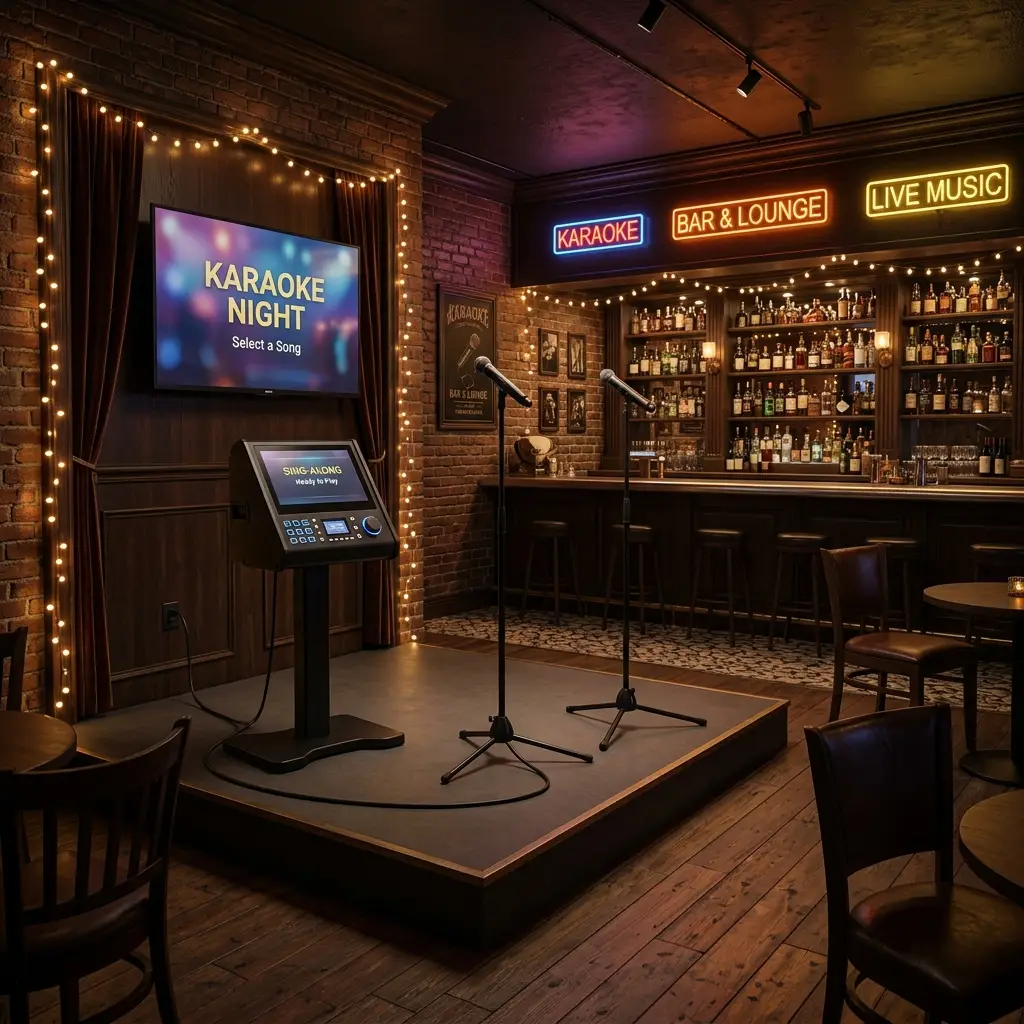
iKarao Shell S1 — Top Pick for Small Bar
280W self-contained, HDMI to venue TV, KaraFun Business (50,000+ songs, commercial licence included), 2 wireless mics. No PA speaker purchase required for rooms under 400 sq ft.
Acesonic DGX-220 — Budget Option for Small Bar/Restaurant
150W, HDMI output, 800+ built-in songs, 2 × XLR microphone inputs. Pairs with the venue’s existing TV for lyric display. No wireless mics included — requires separate mic purchase.
Mid-Size Venue (50–150 guests) — 200–500W Component System
A 150-person venue requires at minimum 500W total system output to cover a 60ft room at 95dB — the standard live performance level. A single all-in-one machine at 280W reaches this threshold in rooms up to 100 guests. Above that, a component system (dedicated amp + PA speakers) is required.
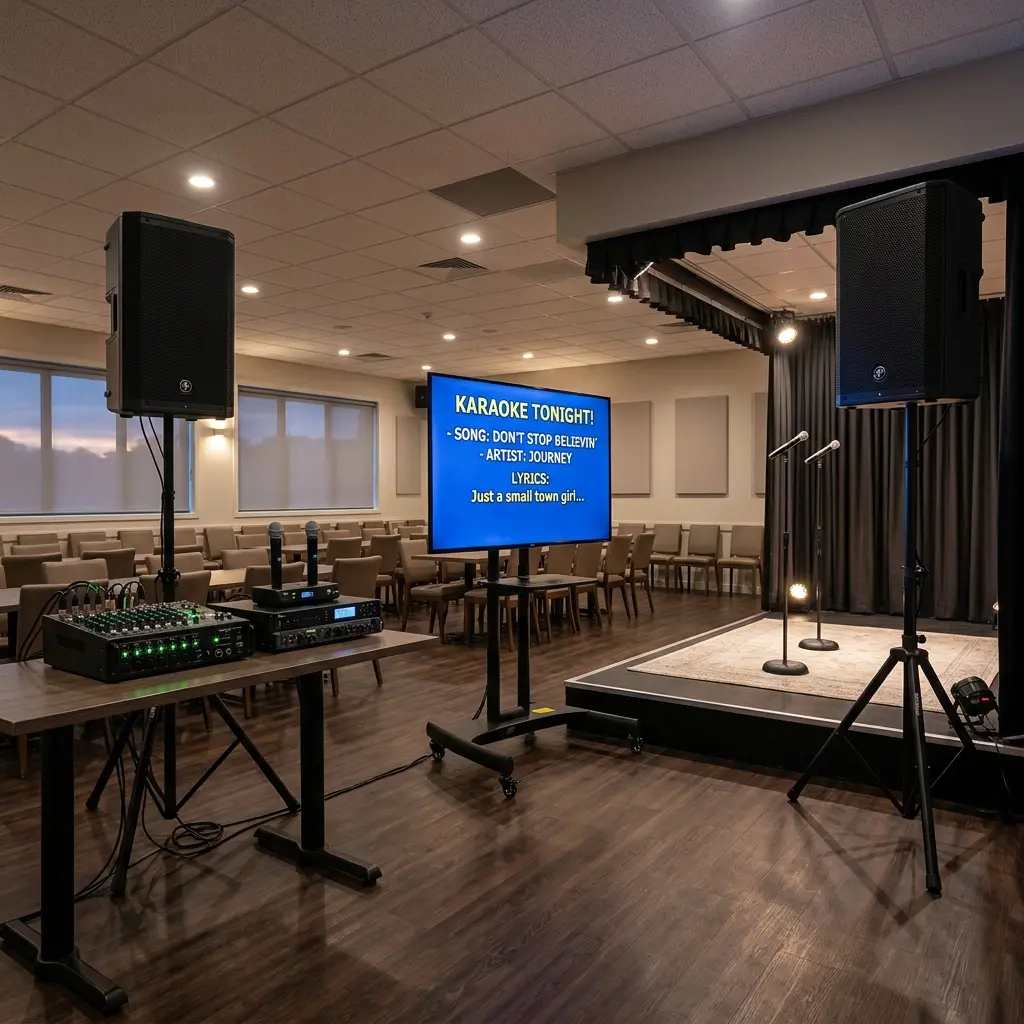
VocoPro DA-4000 Pro + 2 × Yamaha DBR15 — Best Mid-Venue Component System
VocoPro DA-4000 Pro amplifier ($200–$280) paired with 2 × Yamaha DBR15 active 15-inch PA speakers ($400–$600 each) delivers 300–600W total output. VocoPro karaoke machine preamp handles all 4 microphone inputs and key/echo controls. Yamaha DBR15s provide flat, high-SPL PA output across the room.
QFX PBX-812BTL — Self-Contained Mid-Venue Option
400W, 7-inch built-in screen, 2 × UHF wireless microphones, Bluetooth streaming. Self-contained option for mid-size venues and event hire use. No separate PA required for rooms up to 60 guests at full output.
Large Venue, Event Hire or KTV (150+ guests) — 500W+ Full PA System
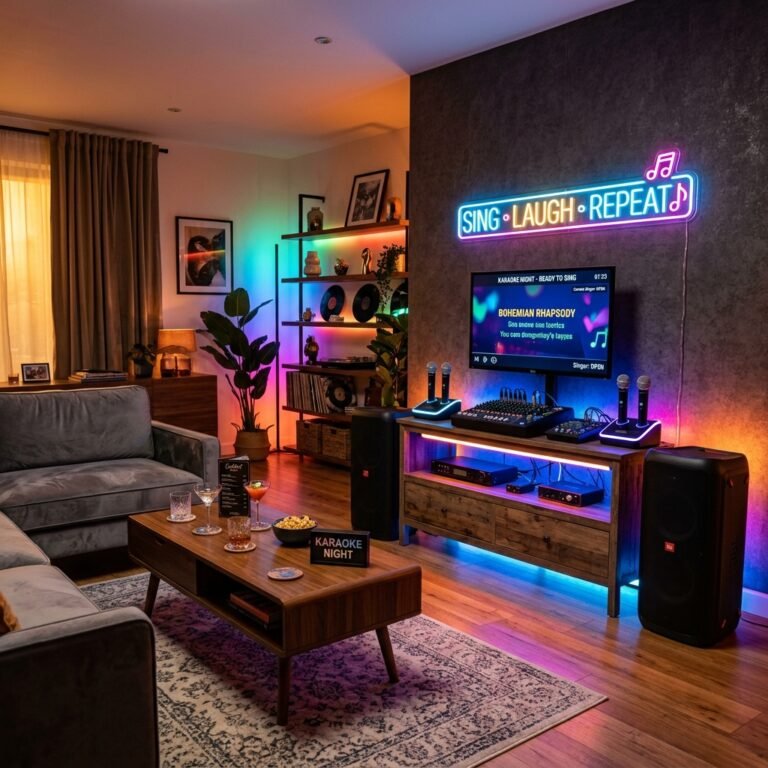
Above 150 guests, no single all-in-one machine produces sufficient output for consistent coverage above 3,000 sq ft. A dedicated PA system integrator is required — the RSN Entertainment system paired with 4 × active PA speakers delivers 1,000W+ total output with full commercial song licensing. The Acesonic PM-810 dedicated karaoke pre-amp ($350–$450) supports 8-channel mixing, Bluetooth, and multi-microphone management for large KTV installations.
Song Library Management for Commercial Karaoke
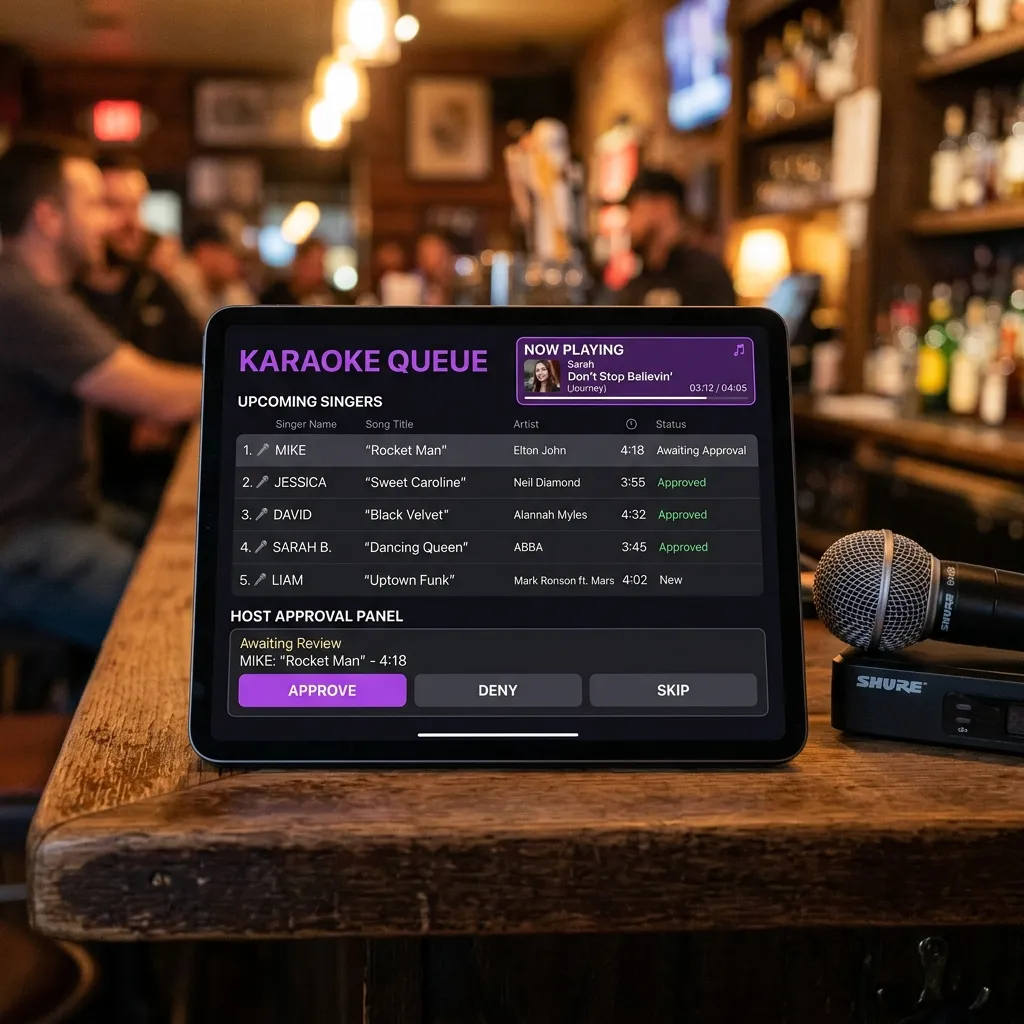
Commercial karaoke song library management requires a licensed, multi-user system — not a personal Bluetooth phone library. The 3 commercial song library platforms are RSN Entertainment (physical disc + hard drive, licensed for commercial play), KaraFun Business ($29/month, 50,000+ tracks, licensed for commercial use), and SuperCD (licensed disc library, older format but legally defensible for commercial venues). Playing consumer karaoke tracks — YouTube karaoke or personal KaraFun subscriptions — in a commercial venue without a commercial licence is a copyright violation for which venue operators are legally liable.
RSN Entertainment System
RSN Entertainment is a physical disc-based library system with commercial play licensing included — supporting 60,000+ tracks stored on a dedicated hard drive. The RSN Fiesta 3 system includes player hardware plus a library subscription covering licensing for commercial performance. RSN is the standard installation for permanent UK and US karaoke venue operators running nightly or weekly karaoke events. Cost: $400–$600 for the full system.
KaraFun Business
KaraFun Business at $29/month provides 50,000+ commercially licensed tracks, unlimited simultaneous users, queue management software, host mode, and multi-screen lyrics output. The commercial licence is included in the subscription. KaraFun Business runs on any Android device including the iKarao Shell S1 — no physical hardware required beyond the playback device. The queue management system allows singers to submit requests via QR code, with the host approving and sequencing the order — essential for busy venues receiving 10+ song requests per hour.
Microphone System for Professional Karaoke
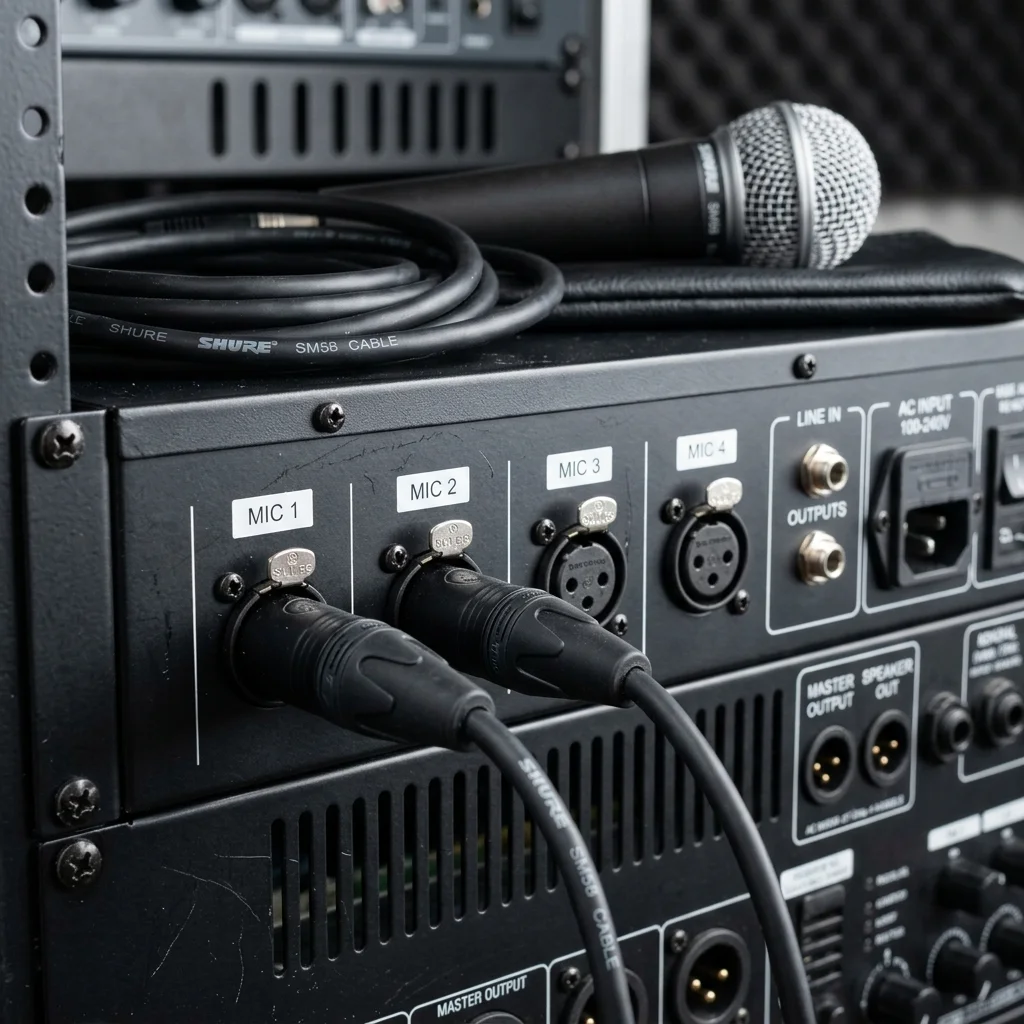
Professional karaoke microphone systems differ from consumer mics in 3 ways: input type (XLR balanced vs 6.35mm unbalanced), simultaneous mic capacity (4–8 vs 1–2), and wireless frequency range (UHF 600–800MHz licensed band vs consumer 2.4GHz). XLR balanced connections reject electromagnetic interference across cable runs above 15 feet — essential for permanent venue installations where mic cables pass near electrical equipment such as refrigerators, lighting rigs, and neon signage. For full setup guidance, see the karaoke machine microphone setup guide.
Dual Wireless UHF System (2 mics — small bar/event)
Shure BLX288/PG58 — Professional Dual Wireless Mic System
2 × UHF H-band wireless microphones, 300ft range, 14hr battery per mic. Licensed UHF band avoids 2.4GHz WiFi congestion in dense urban bar environments. Pairs with any mixer or karaoke amplifier with XLR inputs. Standard wireless mic configuration for small bar use with 1–2 simultaneous singers.
Best for: Small bar / restaurant with 1–2 simultaneous singers.
4-Channel Wireless UHF System (4 mics — mid-size venue)
VocoPro UHF-5800 — 4-Channel Wireless System
4 × wireless UHF microphones, single receiver unit, 100ft range. All 4 mics operate on separate UHF frequencies — zero cross-channel interference. Allows 4 simultaneous singers, which is the standard configuration for KTV rooms and group karaoke events. Compatible with any karaoke amp or mixer with XLR/combo inputs.
Best for: Mid-size venue / KTV rooms / group karaoke events.
Lyrics Display: Dedicated Screen vs HDMI TV vs Dual-Screen
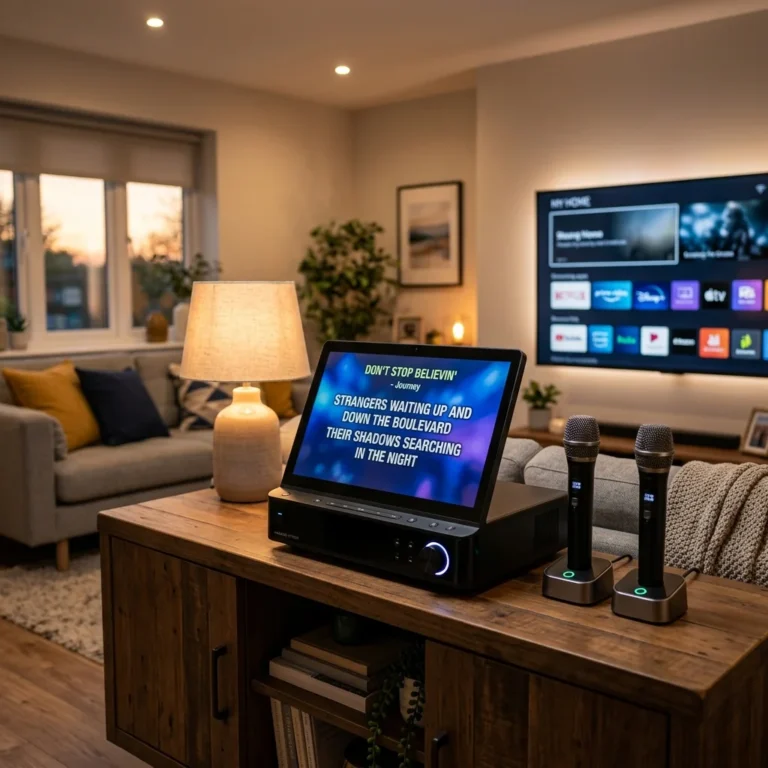
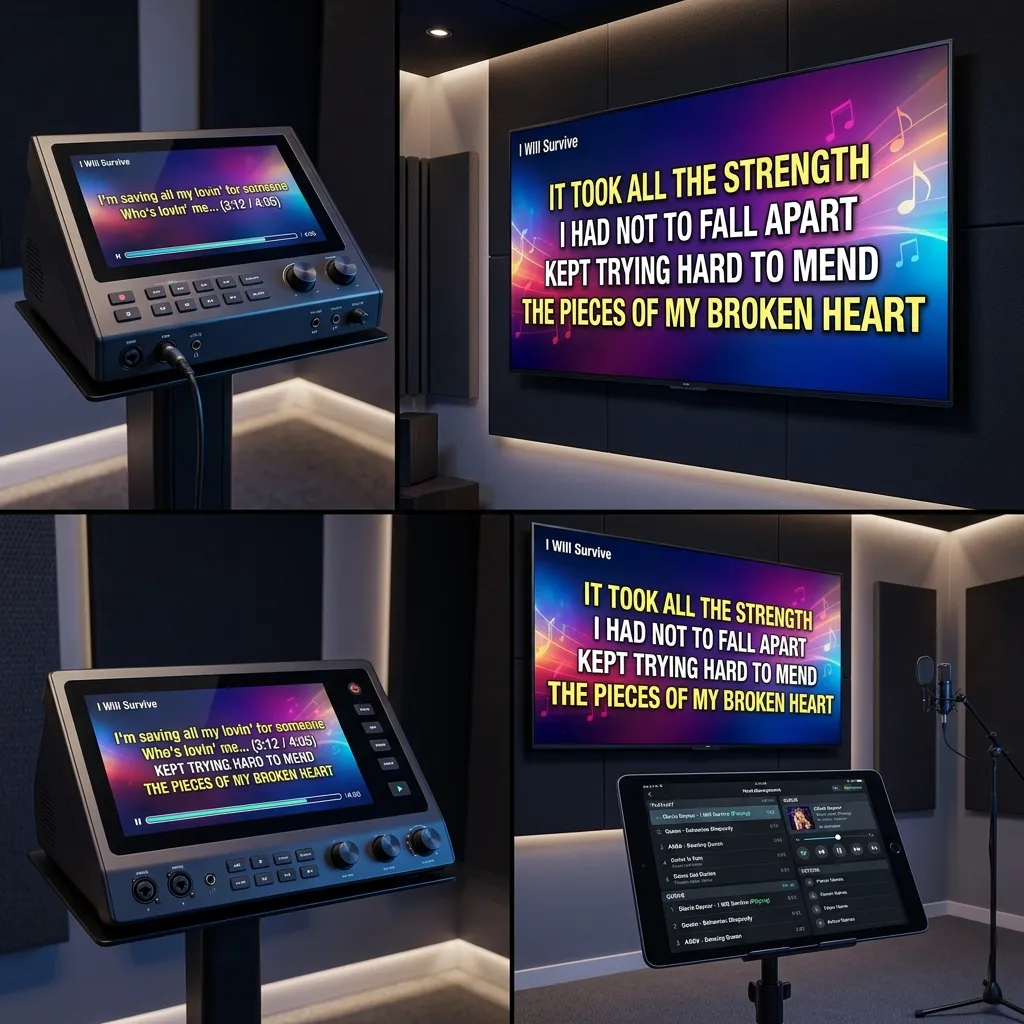
Professional karaoke lyrics display operates on 3 configurations: a dedicated on-unit screen (self-contained, no TV required), HDMI output to a venue TV (higher visibility, larger text), and dual-screen HDMI output (lyrics on dedicated display + separate host management screen). For venue use, HDMI output to a 55-inch+ TV is the standard configuration — text is legible at up to 25 feet at this screen size, which covers the majority of small and mid-size bar layouts. The dedicated on-unit screen (7–10 inch) limits legibility to 8–10 feet — suitable for the performer but not for audience viewing.
What to Look For in a Professional Karaoke Machine: 5 Criteria
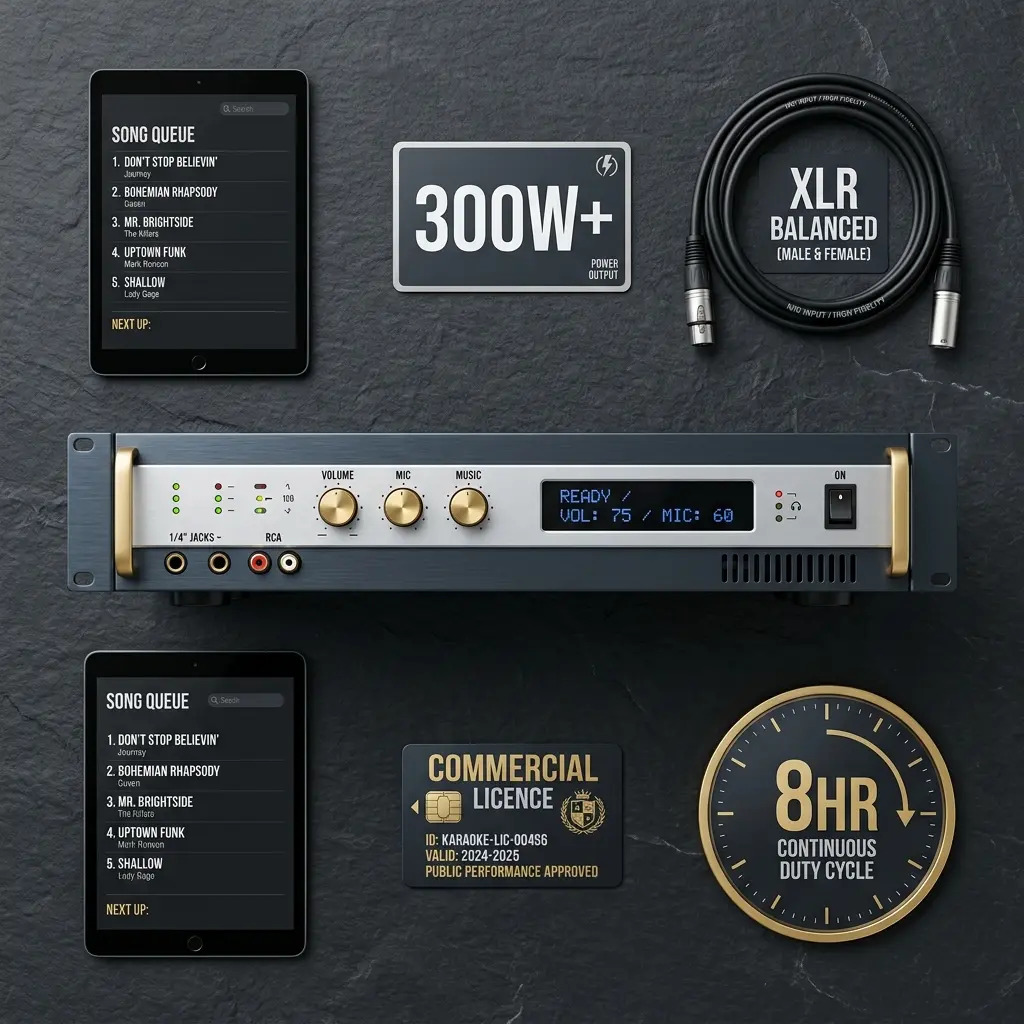
The 5 most important criteria for a professional karaoke machine are output power (venue-matched), microphone input type (XLR for permanent install, UHF wireless for event hire), song licensing compliance, duty cycle rating, and song queue management capability.
1. Output Power (Venue-Matched)
100–200W covers venues under 50 guests in up to 500 sq ft. 200–500W covers 50–150 guests in 500–2,000 sq ft. 500W+ PA system is required above 150 guests or in spaces above 2,000 sq ft. Operating at 80% of rated output — not 100% — is the optimal point for amplifier longevity in continuous commercial use.
2. Microphone Input Type
XLR balanced inputs are required for permanent venue installations — balanced signals reject electromagnetic interference on cable runs above 15 feet. UHF wireless systems (600–800MHz) are preferred for event hire use, eliminating cable trip hazards for mobile deployments. 6.35mm unbalanced inputs are acceptable for portable event use on cable runs under 30 feet.
3. Song Licensing Compliance
Commercial karaoke venues require a commercial licence — personal KaraFun subscriptions and YouTube karaoke are not valid for commercial play. The 3 accepted commercial platforms are RSN Entertainment, KaraFun Business ($29/month), and SuperCD. UK venues additionally require a PPL PRS for Music licence covering the underlying musical compositions. US venues require equivalent ASCAP/BMI public performance licences. Failure to hold a commercial licence exposes venue operators to copyright infringement liability.
4. Duty Cycle Rating
Professional machines are rated for 8-hour continuous operation. Consumer machines are rated for 2–4 hours per session. Exceeding the duty cycle rating causes thermal protection to activate — and in repeated cases, permanent amplifier failure. Always verify the manufacturer’s rated continuous output specification before purchasing for commercial use.
5. Song Queue Management
KaraFun Business and RSN systems include host queue management software — singers submit requests via QR code, the host approves and sequences the list. This capability is essential for busy bar venues receiving 10+ song requests per hour, where manual queue management without software produces bottlenecks and singer complaints. Standalone machines without queue management require a separate tablet running KaraFun Business or equivalent.
Frequently Asked Questions
What is the best professional karaoke machine for a bar?
The VocoPro DA-4000 Pro amplifier paired with 2 active PA speakers is the best system for a permanent bar installation — delivering 200W pre-amp output, 4 XLR/combo mic inputs, digital key control, and professional echo/reverb processing at $200–$280 (amplifier only, excluding speakers). For a self-contained single-unit solution, the iKarao Shell S1 at 280W handles bars up to 100 guests without additional speakers.
What makes a karaoke machine ‘professional’?
A professional karaoke machine has 4 attributes that separate it from consumer machines: output power rated at 300W+ for venue volumes, XLR balanced microphone inputs that reject interference on long cable runs, a duty cycle rated for 8-hour continuous operation, and a commercially licensed song library system. Consumer machines rated for 50W and 2–4 hour operation fail thermally within months under nightly bar conditions.
What is the best karaoke system for a venue?
For venues under 50 guests, the iKarao Shell S1 (280W, Android, KaraFun Business) is the best self-contained option. For venues of 50–150 guests, a VocoPro DA-4000 Pro amplifier paired with 2 active 15-inch PA speakers delivers 400–600W total output. For venues above 150 guests, a full RSN Entertainment system with 4 active PA speakers and a dedicated mixing console is the standard commercial installation.
What song library do professional karaoke bars use?
Professional karaoke bars use commercially licensed song library systems: RSN Entertainment (60,000+ tracks, commercial play licence included), KaraFun Business ($29/month, 50,000+ tracks, commercial licence, queue management software), or SuperCD (physical licensed disc library). Playing consumer-tier Bluetooth streaming or personal KaraFun subscriptions in a commercial venue without a commercial licence is a copyright violation for which venue operators are liable.
How many watts does a professional karaoke machine need?
100–200W covers venues up to 50 guests in a 500 sq ft space. 200–500W covers venues of 50–150 guests in 500–2,000 sq ft. Above 150 guests or in spaces above 2,000 sq ft, a 500W+ distributed PA system is required. These figures assume a reflective commercial interior (tile, brick, or hard plaster walls) at standard karaoke performance levels of 90–95dB average SPL.
What microphone system do professional karaoke venues use?
Professional karaoke venues use UHF wireless microphone systems operating on licensed 600–800MHz frequency bands — not consumer 2.4GHz systems. The 2 standard professional configurations are: dual wireless UHF (Shure BLX288/PG58, $300–$350 — 2 mics, small bar) and 4-channel UHF (VocoPro UHF-5800, $200–$250 — 4 simultaneous mics, mid-size venue). XLR wired mics (Shure SM58, ~$100) remain common for fixed-position karaoke host positions.
Can I use a home karaoke machine in a bar?
A home karaoke machine is not suitable for bar or commercial venue use. Consumer machines rated at 20–80W are undersized for venue volumes — running them at maximum volume in a commercial setting produces amplifier clipping distortion and causes thermal failure within weeks of nightly use. Consumer duty cycles of 2–4 hours cannot sustain a 6-hour bar karaoke night. Consumer machines also lack XLR mic inputs and commercial song licensing required for legal commercial operation.
Do I need a licence to run karaoke commercially?
Yes. Commercial karaoke venues require 2 licences: a commercial karaoke song licence (RSN, KaraFun Business, or SuperCD) covering the karaoke track recordings, and a PPL PRS for Music licence (UK) or equivalent public performance licence (US ASCAP/BMI) covering the underlying musical compositions. The karaoke equipment supplier does not provide these licences — venue operators are responsible for obtaining them independently. Failure to hold a commercial licence exposes venues to copyright infringement liability.